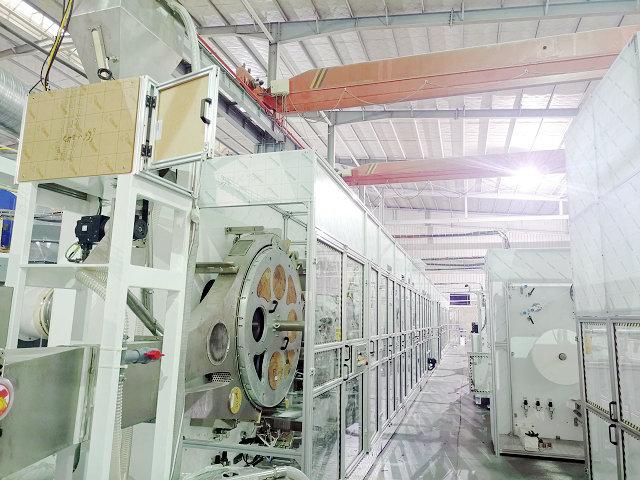
Adult & Baby Diaper Machine,Sanitary Napkins Production Line Blog
Control baby diaper line startup, stable running, roll events, changeovers, quality, downtime, waste, settings, product holds, and shift handover evidence.
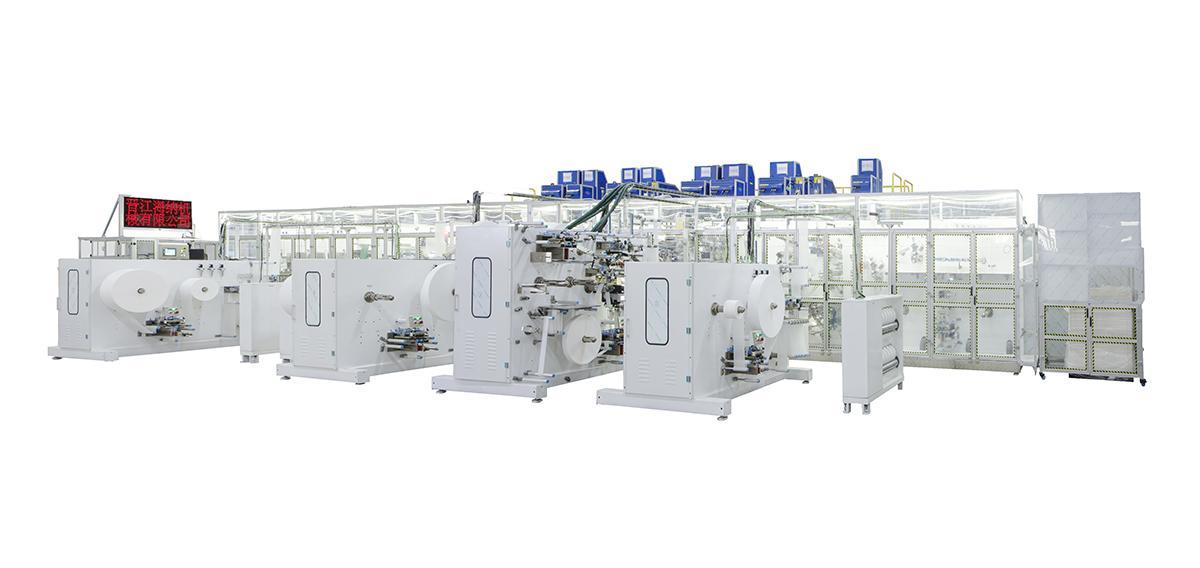
Optimal use of a baby diaper production line means running a controlled process, not forcing the highest displayed speed. The production manager should release the correct materials and recipe, complete startup checks, stabilize one defined product, monitor quality and process trends, control roll and size changes, classify downtime and rejects, and hand over accurate shift records. Design speed, stable working speed, operating speed, and contractual acceptance values must remain separate. Normal output should be set where material handling, formation, bonding, cutting, inspection, rejection, folding, and packaging stay balanced. Every abnormal event needs safe response, product containment, evidence, and verified recovery before routine production resumes.
Baby Diaper Production Line Operating Basis
The operating basis combines an approved product specification, bill of materials, machine configuration, recipe, tooling and change parts, quality plan, utility condition, staffing, packaging boundary, and production order. The shift should not start from a product name alone. Confirm the exact size and construction because visually similar diapers can require different material widths, settings, elastic or fastening arrangements, cuts, folds, inspections, and package counts.
Create a controlled run sheet for each product. It should identify the current recipe, required parts, key mechanical references, materials, wrapper or downstream setup, sample points, normal process windows, escalation limits, and startup release authority. Protected machine settings and quality criteria should not be changed informally to meet a schedule.
Operators need clear boundaries for normal adjustment. State which settings they may change, the permitted range, required reason, and record. Changes outside that boundary go to the designated process, maintenance, quality, or controls role. This prevents several people from adjusting different zones around the same defect.
Review baby diaper manufacturing equipment during FAT with the future operating structure in mind. Verify that screens, tags, alarms, recipes, manuals, and shift data use terms that the factory can carry into its run sheet.
The operating basis aligns product, materials, configuration, quality, and staffing.
Release Materials, Recipe, and Line
Material release should confirm identity, status, roll condition, width and build, splice preparation, storage condition, and approved substitution. Stage rolls in sequence and protect them from damage. If a substitute material is used, verify that the approved recipe and quality checks remain suitable or complete the required change review.
Line clearance prevents product and material mix-up. Remove prior materials, labels, packages, rejects, samples, loose parts, cleaning items, and old documentation. Inspect product paths, waste bins, wrapper areas, counters, and data fields. Record clearance before the new order is threaded.
Confirm change parts and recipe independently. The control system may load positions and timing, but it cannot prove that the correct tooling, guides, wrappers, or physical settings are installed. Use identified parts, setup references, and a second check for critical format elements. Verify the recipe version and access level.
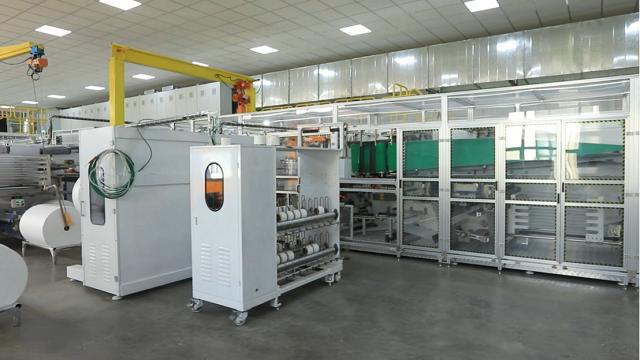
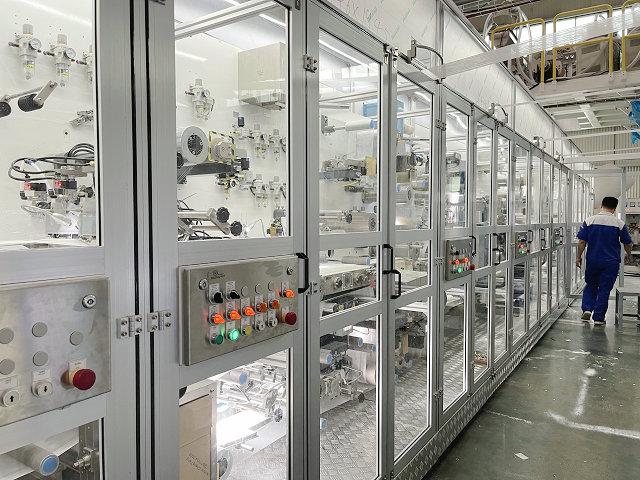
Pre-start inspection should cover guards and safety functions, lubrication and leaks, cleanliness, fasteners, tooling, blades, rollers, sensors, web guides, adhesive systems, extraction, compressed air, electrical status, rejects, packaging interface, and maintenance release. Any bypass or temporary repair needs formal authorization and risk review; it should not become normal startup condition.
Control Startup and Stabilization
Thread and start the line using the approved sequence. Establish material feeds and utilities in a controlled order, verify manual functions where required, and use the defined initial operating condition. Observe each web and process section before increasing rate. A problem created upstream can appear later as a position, bond, cut, fold, or package defect.
Segregate startup output. Inspect material presence, absorbent formation, layer and elastic position, fastening features, dimensions, bonding, cut, fold, wrapper, appearance, and selected performance characteristics according to the product plan. Do not release output because one sample looks acceptable; follow the approved sampling and stabilization rule.
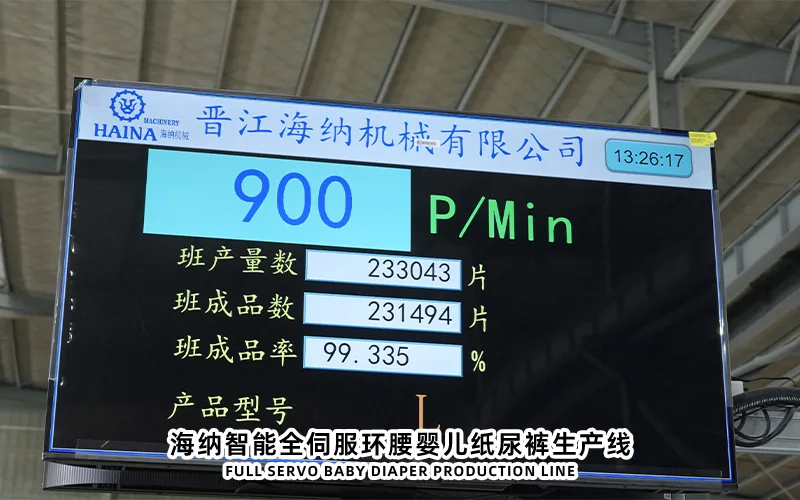
Increase operating speed only after process and quality conditions are stable. Design speed is not a startup target. The chosen operating speed should keep forming, tension, adhesive, elastic, cutting, inspection, reject, folding, counting, and packaging balanced. Record the point at which stable production begins for downtime and yield analysis.
If repeated adjustment is needed, stop increasing rate. Preserve original settings, classify the symptom, and check material, mechanical, controls, process, and measurement causes. Multiple simultaneous changes can produce temporary improvement without identifying the cause.
Startup should stabilize upstream material and process zones before full-line release.
Operating state
Production manager question
Required evidence
Release decision
Pre-start
Are materials, recipe, parts, safety, and clearance correct?
Signed order and line release
Permit threading or hold
Startup
Are process zones tracking the product basis?
Zone checks and segregated samples
Continue setup or correct
Stable run
Are rate, quality, rejects, and packaging balanced?
Trend, samples, counters, stop record
Maintain condition or escalate
Abnormal event
What product and equipment scope is affected?
Timeline, alarms, containment, findings
Recover, repair, or investigate
Shift close
Can the next team reconstruct current condition?
Counts, losses, settings, issues, open actions
Accept handover or clarify
Hold Stable Running Conditions
Stable running is active control, not lack of alarms. Operators should observe material roll state, web paths, guide corrections, tension behavior, absorbent distribution, adhesive or bonding process, elastic feeds, fastening placement, cut appearance, folding, wrapper, inspection, reject confirmation, counters, and packaging flow. Use normal ranges and visual standards linked to the product.
Quality samples should be time stamped and related to line condition. Trend dimensions and component positions rather than waiting for a failed limit. When a trend shifts, check material lot, roll event, speed change, setting adjustment, tool condition, temperature or utility change, and maintenance history. A process can drift while all products still pass, offering time for controlled correction.
Do not hide unstable zones by reducing inspection sensitivity or disabling reject logic. If a sensor becomes unreliable, contain affected product and follow the approved response. Manual inspection may be a temporary control only when quality authority defines the scope, sampling, duration, and release.
Line speed changes should have a reason and observation period. Record effects on quality, rejects, stops, and downstream balance. The fastest sustainable condition is not necessarily the most economic when material waste, adjustment, wear, or packaging interruption rises.
Manage Roll Events and Size Changeovers
Prepare roll changes before material end. Verify new roll identity and orientation, splice materials, tools, safe access, and operator roles. During an automatic or assisted splice, monitor detection, tension, web guidance, process response, affected product tracking, inspection, and reject. Record failed splices separately from ordinary roll replenishment.
When a web breaks, stop and isolate according to the recovery method. Preserve evidence before removing damaged material. Check roll condition, splice, tension, guide, roller surface, obstruction, alignment, and acceleration history. Simply rethreading without identifying a repeat cause can consume material and create further stops.
Size changeover should use a checklist that covers line clearance, material widths, change parts, tooling, mechanical positions, recipe, sensors, inspection, reject, wrapper, counters, package handoff, and quality sampling. Record last accepted old product and first accepted new product. Separate offline preparation, stopped-line work, and stabilization.
Review changeover after the run. Repeated search for parts, difficult access, wrong settings, excessive trial output, or delayed quality release reveals improvement opportunities. Correct identification, carts, presetting, reference marks, and training before setting an unsupported faster target.
Roll and format changes need prepared roles, product containment, and verified restart.
Respond to Quality, Downtime, and Waste
When a quality result fails, identify the last known acceptable check, contain the potentially affected interval, stop or adjust only through the reaction plan, and preserve material and machine evidence. Quality personnel determine product disposition. The production manager coordinates process correction without releasing suspect output to protect schedule.
Downtime categories should identify equipment zone and reason. Mechanical, controls, material, process, quality, utility, packaging, staffing, planned work, and waiting can be separated as useful. Record the first cause, not every alarm generated after it. A blocked wrapper may stop upstream drives and create many secondary messages.
Waste should be classified at source: startup, changeover, roll or splice event, web break, process adjustment, quality reject, inspection challenge, jam, packaging, or planned sample. Weighing or counting methods depend on the factory, but definitions must stay consistent. Avoid setting an unsupported universal waste target.
Use a short daily loss review. Select repeated or high-impact categories, verify records at the machine, assign containment and investigation, and confirm the result of action. HAINA can support review of equipment behavior and FAT or service evidence for the supplied line when the factory provides a clear event timeline and configuration.
Build a Useful Shift Handover
Handover should state current order, product, material lots, recipe, tooling, operating condition, accepted output, rejects, waste categories, downtime, quality status, maintenance completed, temporary controls, open alarms, and expected next events. Identify products or materials on hold and their physical location.
Walk the line together for abnormal conditions. Check roll state, splice preparation, cleanliness, lubricant or adhesive leakage, tools, guards, waste bins, reject collection, wrappers, change parts, and maintenance tags. Verbal handover alone can omit a physical risk.
The incoming team should acknowledge priorities and limits. If the line is not in normal condition, state who owns the issue, what evidence exists, what actions are allowed, and what approval is needed. Do not transfer an unresolved deviation as an ordinary operating setting.
Shift Control Board
Run identity: Order, product, recipe, tooling revision, materials, wrapper, packaging boundary, and responsible roles.
Current condition: Operating speed, stable-since time, quality trend, inspection status, reject confirmation, and active constraints.
Loss evidence: Accepted output, startup and changeover output, rejects, waste causes, downtime events, and waiting.
Open control: Material or product holds, temporary measures, maintenance findings, overdue actions, and escalation owner.
Next event: Roll changes, samples, cleaning, maintenance, format change, material transition, and planned stop preparation.
A complete handover connects machine condition, product status, losses, and next actions.
Frequently Asked Questions
Should a diaper line always run at its highest speed?
No. Set operation where the complete line holds product quality, material stability, reliable inspection and rejection, controlled stops, and downstream balance.
Who may change machine settings?
Define access by role. Operators use approved ranges; process, maintenance, quality, or controls specialists approve changes outside normal limits and record the reason and result.
How should startup products be handled?
Segregate them until the approved sampling and stabilization criteria are met. Record their disposition separately from routine accepted output.
What should be recorded after a web break?
Capture material and roll identity, splice, location, speed and sequence, alarms, tension or guide evidence, damaged surfaces, affected product, repair, and restart result.
Conclusion
Optimal use of a baby diaper production line depends on controlled release, deliberate startup, stable process observation, prepared roll and size changes, disciplined loss response, and factual shift handover. The production manager should protect accepted output rather than chase a display value. The next practical action is to run one shift with a unified control board, reconcile every material event, setting change, sample, reject, stop, waste category, and held product at shift end, then correct the largest evidence gap before changing operating speed or output targets.