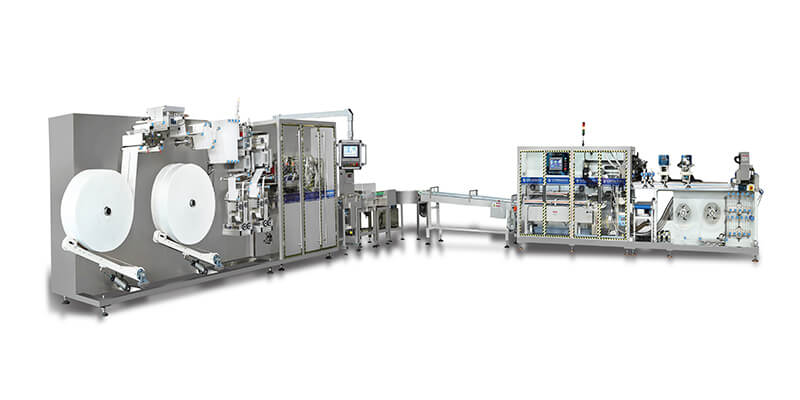
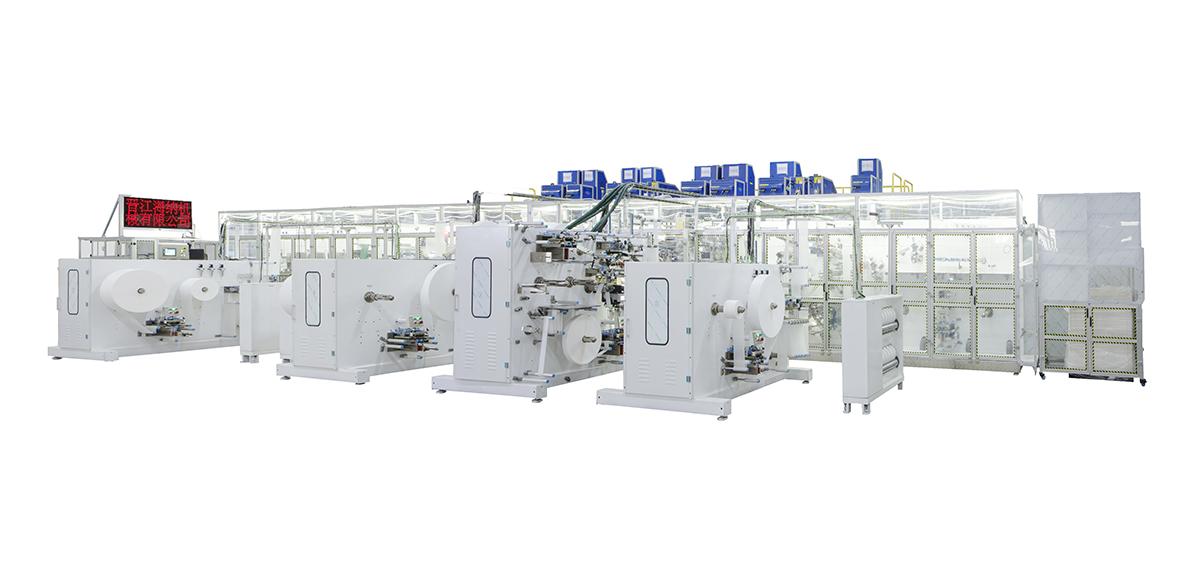
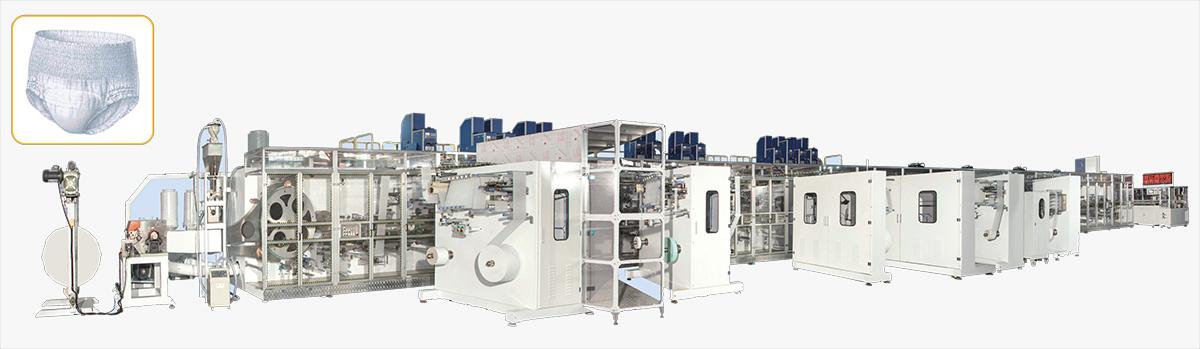
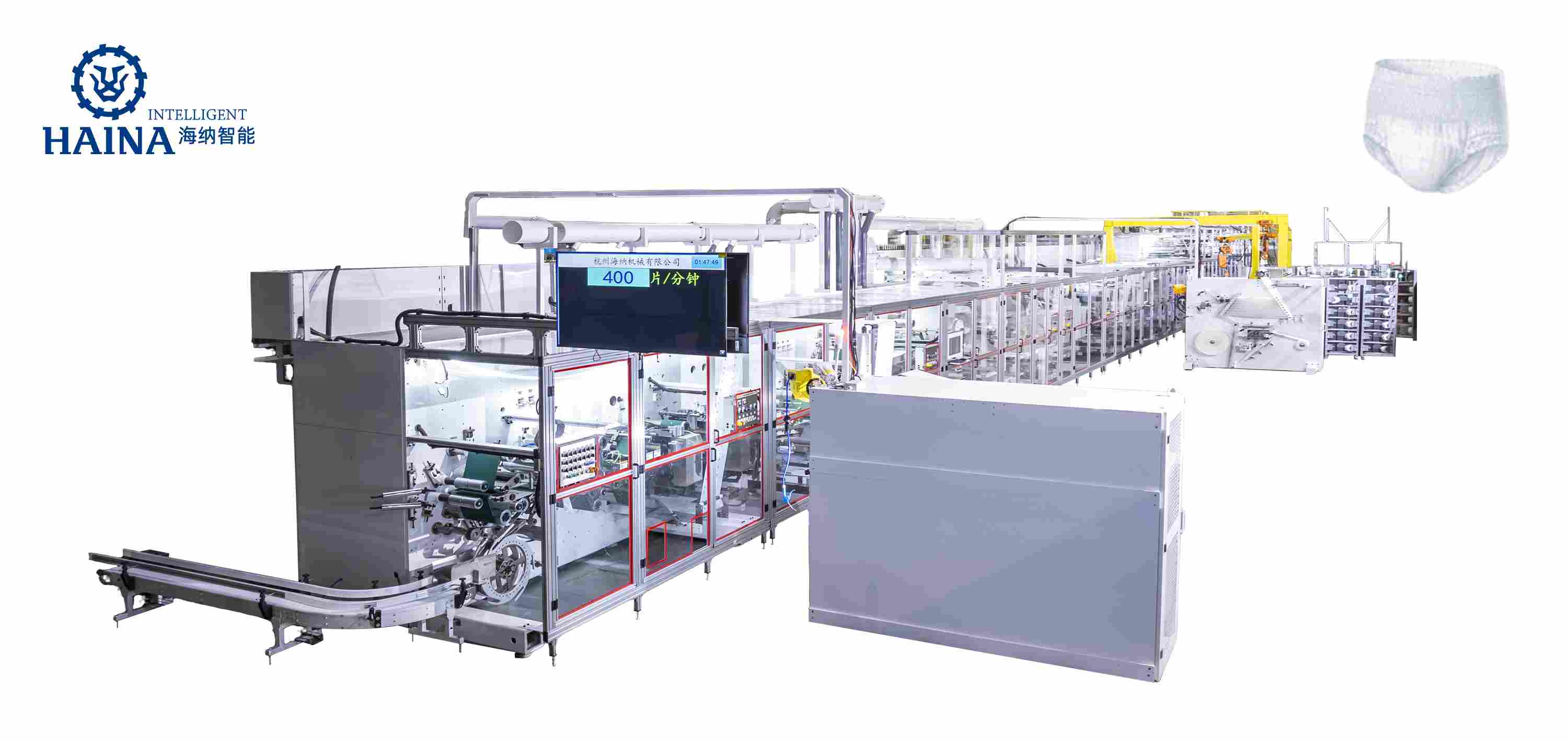
Repair and maintenance of an adult diaper making production line should follow a safe evidence sequence: isolate every energy source, preserve the alarm and product symptom, locate the first process deviation, inspect upstream material and machine condition, repair under controlled instructions, restore guards and settings, and verify adult diaper quality before release. Maintenance should be planned by failure consequence and observed condition across unwinds, core handling, wide web paths, elastics, fastening systems, adhesive, cutting, folding, inspection, and discharge. Record parts, measurements, causes, and trial samples. Never return the line to production because motion resumed; functional and product acceptance are separate requirements.
Repair Principles for an Adult Diaper Making Production Line
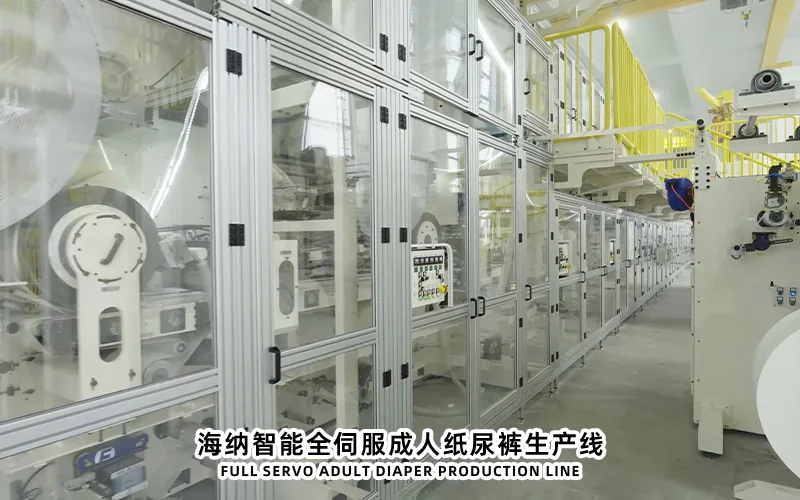
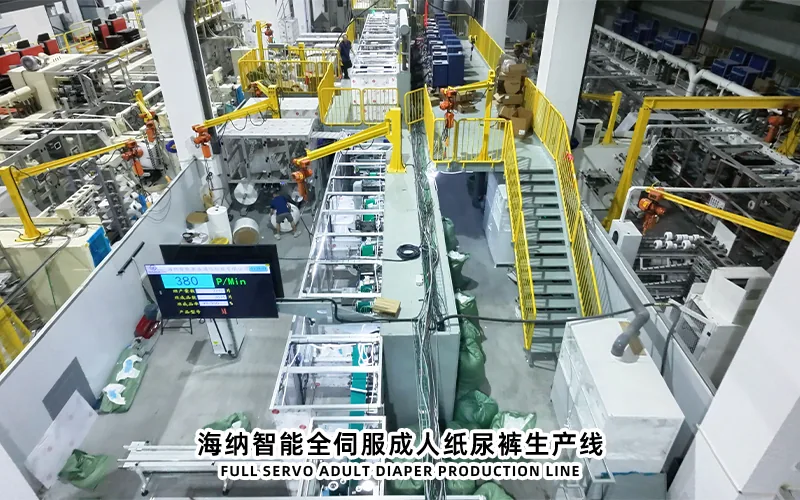
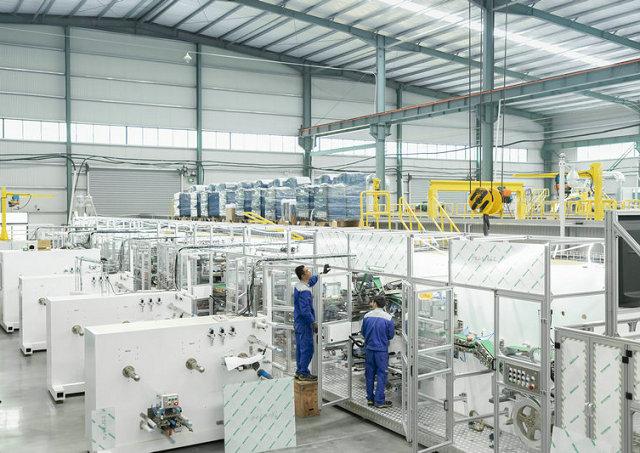
Adult diaper lines handle broad layered products and absorbent cores, with features that can include leg cuffs, elastics, waist elements, tapes or hook components, landing zones, and shaped cuts according to the configured design. Larger material widths and product mass can make web support, transfer, vacuum, alignment, cutting, folding, and downstream handling important diagnostic areas. The exact machine architecture remains the controlling reference.
Use an asset hierarchy by function and zone. Connect each assembly to manuals, drawings, component identity, inspection points, spare information, failure history, and product attributes. HAINA can review equipment-specific maintenance, diagnostic, and FAT references, while the factory defines safe work, technician authorization, quality release, and local maintenance intervals.
Repair planning should reflect the actual adult diaper modules and their product effects.
Separate failure correction from cause removal. Replacing a broken belt, worn cutter, blocked nozzle, damaged bearing, or failed sensor can restore function, but the underlying driver may be misalignment, contamination, loading, utility variation, unsuitable material, poor setup, or a repeated process upset. Record both immediate repair and cause status. If cause is unconfirmed, assign a test and monitoring plan.
Isolate Safely and Preserve Diagnostic Evidence
At a fault, stop through the approved method and control affected product. Capture the first alarm, sequence, machine state, operating speed, product and recipe, material lots, first visible defect, recent change, sound, odor, heat, and location. Repeated resets can erase evidence and move damaged product farther into the line.
Plan isolation for electrical, pneumatic, thermal, vacuum, hydraulic if present, gravitational, rotational, spring, elastic, and other stored energy. Verify the safe state through the site's procedure. Where movement is needed for diagnosis, use a separately authorized controlled mode with defined access, speed, communication, and stop condition. Never reach through guarding to observe a suspected web or cutter problem.
Use the product symptom to locate the first departure. Trace a wrinkle upstream through transfers and web guides. Trace a displaced tape through detection, feed, cut, placement, and phase. Trace a weak bond through substrates, adhesive pattern, compression, timing, and contamination. Trace a poor final fold through incoming geometry, cut, transfer, and folding devices. The final jam is often a consequence.
Inspect Adult Diaper Process Risks
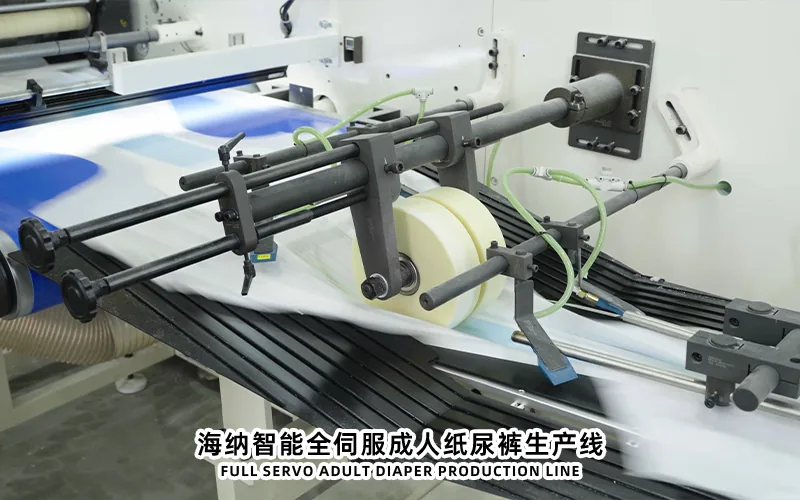
At unwinds, inspect roll seating, shaft or chuck condition, brakes or drives, wide-web support, edge guiding, rollers, tension feedback, splices, and material condition. Broad webs can reveal cross-direction wrinkles, bagginess, uneven roll build, or alignment differences. Compare left, center, and right conditions where meaningful rather than judging only one edge.
For the absorbent core, inspect feed, defibration or core supply as configured, polymer delivery, distribution, dust control, forming, wrapping, vacuum, transfer, and containment. Preserve samples across the width and sequence. A variation can arise from material feed, blocked air or vacuum path, deposits, component wear, or setup. Do not correct core shape solely through downstream compression.
Adult diaper zone
Typical symptom
Conditions to inspect
Repair acceptance evidence
Wide web handling
Wrinkle, wandering, uneven layer
Roll build, guide, roller, tension, alignment, splice
Cross-web inspection helps diagnose tracking and layer conditions in larger adult products.
Inspect adhesive and bonding systems under their safe service method. Check substrate identity and surface, temperature response, delivery, filters, hoses, nozzles, pattern, position, compression, timing, leakage, and contamination. For cutters and anvils, inspect wear, damage, engagement, phase, product thickness, debris, bearings, and fastening. Never clear pressurized hot-melt equipment or moving cutters through improvised access.
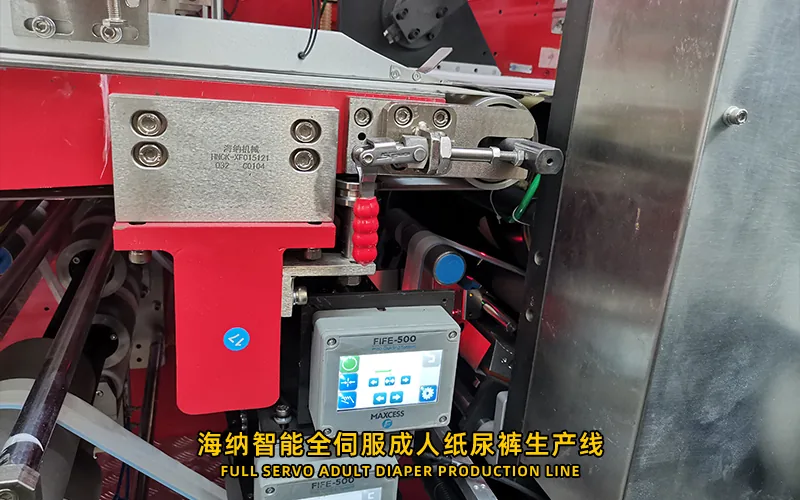
For controls, inspect sensor lenses and targets, mounts, cables, connectors, encoder couplings, pneumatic devices, cabinet condition, communication, and event history. Record parameters before change. Following detection or reject repair, test the full chain from controlled challenge through tracking and physical segregation. A signal alone does not prove rejection.
Choose Repair, Adjustment, or Replacement
Adjustment is appropriate when the component is serviceable, the reference is known, and the deviation can be restored without hiding wear or material incompatibility. Repair is appropriate where an authorized method can return the item to its specified condition and inspection can verify it. Replacement is appropriate where damage, wear, reliability risk, safety relevance, economics under buyer policy, or unavailable repair evidence makes continued use unacceptable.
Use a decision record with symptom, confirmed condition, drawing or manual reference, measurements, repairability, spare identity, product risk, downtime effect, temporary-control possibility, and required test. Do not make unauthorized modifications to guards, protective devices, pressure boundaries, controls, or precision tooling. Escalate design weaknesses through engineering change control.
Before installing a spare, confirm manufacturer and model, ratings, dimensions, material where important, connector, direction, firmware or configuration, and matched assembly requirements. Inspect storage condition. For repaired parts, retain repair scope and test results. Update serial or configuration records where applicable.
After work, independently inspect high-consequence assembly such as cutters, drives, safety devices, hot systems, and control changes according to site rules. Account for tools, fasteners, old parts, and cleaning materials. Restore lubrication and guards. Preserve removed parts when cause analysis is incomplete.
Build Preventive and Condition-Based Work
Combine operator observations, scheduled cleaning, lubrication, measured condition, functional tests, planned replacements, and shutdown inspection. Set frequency from supplier and component instructions, duty, environment, material deposits, observed deterioration, and failure consequence. Do not assign one generic interval to every bearing, belt, sensor, cutter, and vacuum path.
Trend web correction, roller condition, belt tracking, noise, temperature, vibration where an approved method exists, adhesive leakage, filter condition, cutter wear, vacuum or extraction behavior, sensor adjustment, alarm frequency, and recurring product defects. Use consistent measurement points and operating states. Qualitative observations need precise location and context.
Condition routes should connect serviceable machine points with adult diaper quality risk.
Review an interval after every meaningful finding or unexpected failure. Compare the previous acceptable state, elapsed runtime, materials, products, cleaning, and symptoms. Ask whether the method would have detected the deterioration and whether related assemblies need review. Update the task and verify effectiveness on a relevant later inspection.
Plan shutdowns by zone and dependency. Freeze scope, parts, tools, drawings, access, lifting, competencies, hold points, cleaning, and restart. Coordinate teams sharing guards, utilities, or controls. Record unexpected conditions and approve scope changes; do not leave a discovered defect undocumented because the outage window is closing.
Control Critical Spares and Repair Records
Rank spares by failure consequence, detectability, replenishment uncertainty, repair possibility, and commonality. Separate consumables, wear parts, failure spares, repairable units, and strategic items. Adult-line format tooling, wide transfer elements, cutters, sensors, drives, adhesive components, and selected bearings may have different storage and handling needs based on final configuration.
Reconcile the spare list with the installed bill of materials and drawings. Label location and configuration needs. Protect precision surfaces, electronics, elastomers, lubricants, and adhesives. Use controlled issue and return so a removed suspect part does not reenter stock. Review shelf or preservation requirements using manufacturer instructions.
A repair record should state fault, safe state, product and material context, cause or hypothesis, inspection, measurements, work, parts, settings, software, tests, samples, restrictions, and follow-up. Attach meaningful photographs and trends. "Repaired and running" does not support recurrence analysis.
For an adult diaper making machine, request the final component register, maintenance documents, spare recommendations, alarm guidance, backup method, and representative repair demonstration before acceptance. Verify that documents match the delivered line and local technicians can use them.
Recover Through Product-Based Acceptance
Adult-line recovery starts with a physical walkdown across the repaired zone and the wide product path. Confirm the installed part, cross-machine alignment, secured joints, lubrication, removed tools, clean vacuum surfaces, restored guards, and authorized isolation removal. Run the zone without saleable material where the approved procedure permits, watching left, center, and right behavior as well as direction, load, noise, temperature, vacuum, and transfer. Stop if the former symptom returns or a new cross-width difference appears.
Next, feed the identified adult-diaper material set and quarantine a numbered sequence of trial products. Sample across both product width and time so the team can detect skew, uneven core distribution, cuff or elastic displacement, fastening variation, bond differences, contour-cut defects, and folded-presentation drift. Compare those samples with the pre-repair evidence and the product specification. This width-and-sequence method makes adult-product recovery distinct from a generic machine function check.
A repair is complete only after the affected adult diaper attributes pass controlled checks.
Define acceptance authority. Maintenance verifies the repair and machine condition; production demonstrates correct setup and sustained running; quality decides product disposition; engineering approves changes; safety functions participate according to site rules. Schedule a follow-up where parts can settle, warm, loosen, or drift. Keep temporary restrictions visible until permanent closure.
Frequently Asked Questions
What should happen first after an adult diaper line fault?
Protect people and product, stop through the approved method, preserve alarms and samples, identify the affected output window, and isolate relevant energy before inspection. Do not begin with repeated resets.
Why can adult diaper web problems require cross-width checks?
Broad materials can show different tension, roll-build, wrinkle, support, alignment, or transfer conditions across the width. Compare left, center, and right where the process and safe method permit.
When can a temporary repair be used?
Only through authorized risk and change control, with defined scope, inspection burden, product controls, owner, expiry, and permanent action. It must not bypass protective functions or become an undocumented normal condition.
How is successful repair verified?
Verify correct assembly, safe restoration, stable function, relevant alarms and challenges, conforming trial diapers, documented approval, and a follow-up condition check where the repair may settle or drift.
Conclusion
Repairing and maintaining an adult diaper making production line requires safe diagnosis, adult-product-specific inspection, disciplined repair decisions, condition work, controlled spares, and product-based restart. The maintenance supervisor should now select the most repeated failure and reconstruct its alarm, sample, material, setting, part, and acceptance history. Review equipment-specific evidence with HAINA, then approve the corrective action only after the repaired zone and affected adult diaper characteristics pass a documented repeat trial.