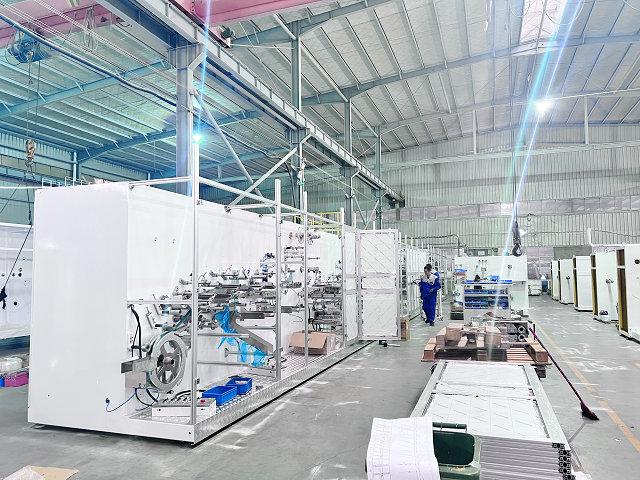
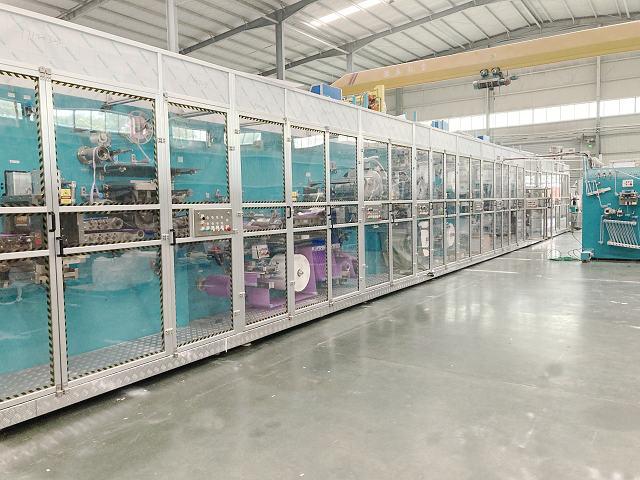
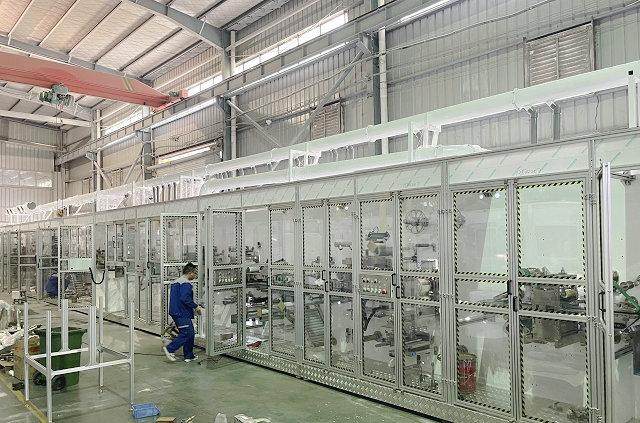
Available diaper machine types are best classified by finished product, process scope, and automation boundary. Product families include open baby diapers, pull-on products, adult diapers, and other absorbent hygiene formats, each requiring a matching construction and process design. Within a family, buyers can compare complete production lines, selected converting sections, and downstream counting or packaging equipment. Terms such as fully automatic, semi-automatic, high speed, or customizable are not precise machine types unless the supplier defines included modules, manual work, interfaces, materials, and tested output. The correct selection begins with the intended product architecture and factory operating model.
Diaper Machine Types by Finished Product
The first classification question is what product leaves the line. An open baby diaper line is designed around a baby product construction with fastening tabs and side features. A pull-on line forms a pant-style product with a waist structure and related joining and cutting processes. Adult diaper equipment addresses a different product scale, material arrangement, fit requirement, and handling need. Adult pull-on products create another process boundary. These families should not be treated as simple size settings on one universal platform.
Within each family, the buyer must define sizes, material layers, core concept, elastic locations, fastener or waist construction, finished fold, and quality requirements. Suppliers can then map the necessary unwinders, web control, forming, adhesive, elastic, bonding, cutting, inspection, reject, folding, and transfer modules. A product name alone is insufficient because two diapers in the same family may have materially different architectures.
Some proposals are described as machines for special materials or environmentally positioned products. Material choice does not automatically create a separate equipment class. Verify whether the proposed webs, absorbent materials, films, adhesives, and elastics can be handled by the process and whether the finished construction can be demonstrated. Avoid accepting a broad label such as "biodegradable diaper machine" without a defined product and material trial.
Finished-product construction is the primary basis for machine classification.
Open Diaper and Pull-On Architecture
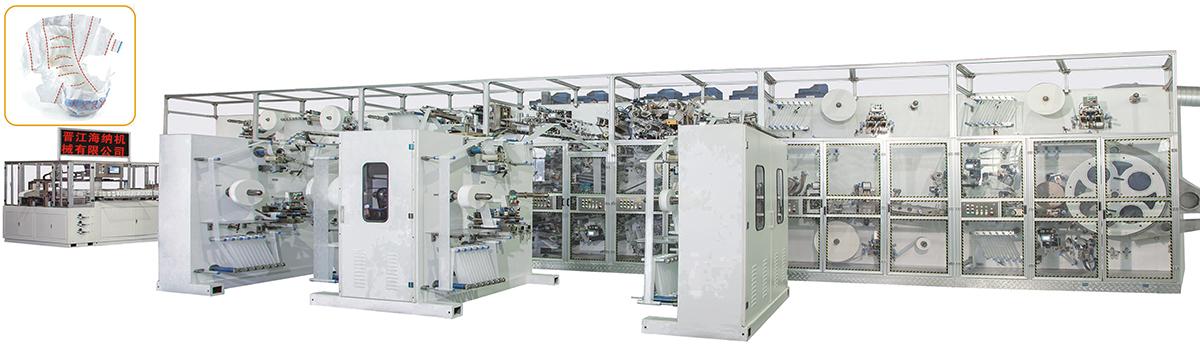
Open diapers and pull-on products place different demands on web paths and converting stations. An open diaper normally requires controlled placement and joining of fastening components and side features. A pull-on product requires formation of a continuous or joined waist structure, side-seam processing, and cutting or separation appropriate to the selected architecture. Those differences affect machine length, controls, tooling, change parts, inspection, and operator tasks.
A platform may share upstream functions across variants, but shared modules do not prove full conversion capability. Ask for a station-by-station comparison showing common equipment, dedicated equipment, exchanged assemblies, reserved spaces, software changes, and validation required. If future pull-on capability is important, specify it during the project rather than assuming the open-diaper line can be economically converted later.
The same logic applies between baby and adult products. Scaling dimensions changes web widths, loads, material consumption, handling, tooling, and downstream packaging. Buyers should request a product envelope and configuration limits supported by drawings and trials. A supplier's general statement of flexibility should not replace those limits.
Complete Lines and Individual Process Sections
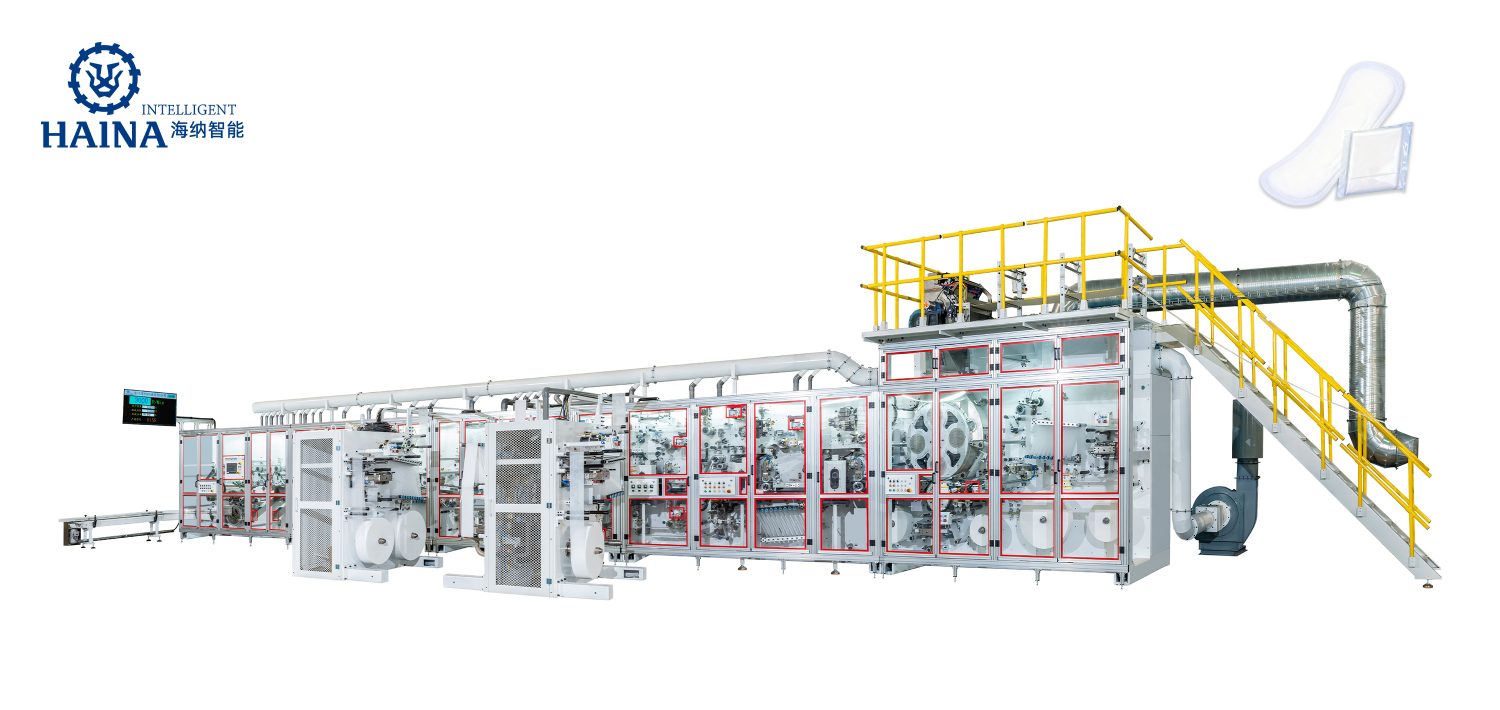
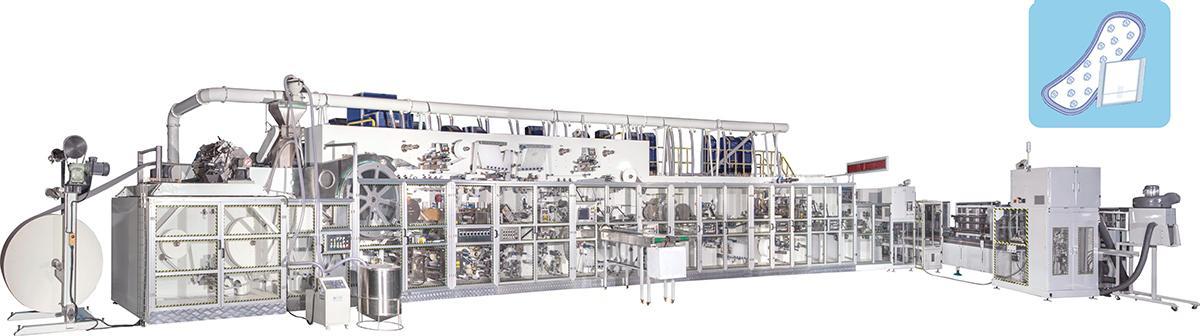
A complete diaper production line integrates the agreed path from raw materials to counted or transferred finished products. The exact endpoint can vary. Some projects end at a product discharge or stacker; others include bagging or connection to separate packaging equipment. State the battery limits on a process diagram and list every included and excluded function. This makes proposals comparable.
Individual process equipment can also be supplied for forming, elastic handling, cutting, folding, counting, or packaging, but integration risk shifts toward the buyer or system integrator. Mechanical handoff, speed synchronization, controls, safety circuits, data exchange, reject tracking, accumulation, and responsibility for total-line acceptance must be designed. Purchasing a nominally compatible station does not establish that it will work with an existing line.
For a new factory, an integrated baby diaper manufacturing line may simplify single-boundary testing and documentation. For an established factory with engineering resources, a targeted section replacement may solve a defined constraint. The decision should follow the project scope and integration capability, not an assumption that complete is always better or that a smaller machine is always lower risk.
Complete-line scope must identify its upstream and downstream battery limits.
Classification
Defines
Buyer must specify
Evidence to request
Product family
Open baby, pull-on, adult, or another defined format
Fully automatic is meaningful only after the start and end boundary is stated. Material rolls may still require manual transport, loading, preparation, and splicing. Adhesive and other consumables may need operator replenishment. Size changes may involve tooling, web threading, and quality adjustment. Finished products may be counted automatically but bagged manually. Ask suppliers to map every regular operator intervention by role and frequency basis.
Semi-automatic can describe many different arrangements, from manual feeding around an otherwise controlled process to separate machines connected by operators. It should not be used as a shortcut for lower cost or easier operation. Evaluate product handling, work-in-process, consistency, staffing, traceability, ergonomic exposure, and the ability to coordinate stops. A less integrated process may suit a specific operating model, but the consequences need to be planned.
Control-system sophistication is another dimension. Recipe management, automatic web guidance, splice functions, inspection, reject logic, alarm guidance, event records, and downstream communication may differ even when two lines are both marketed as automatic. List required functions and verify them at FAT rather than scoring the label.
Capacity Class Depends on Line Balance
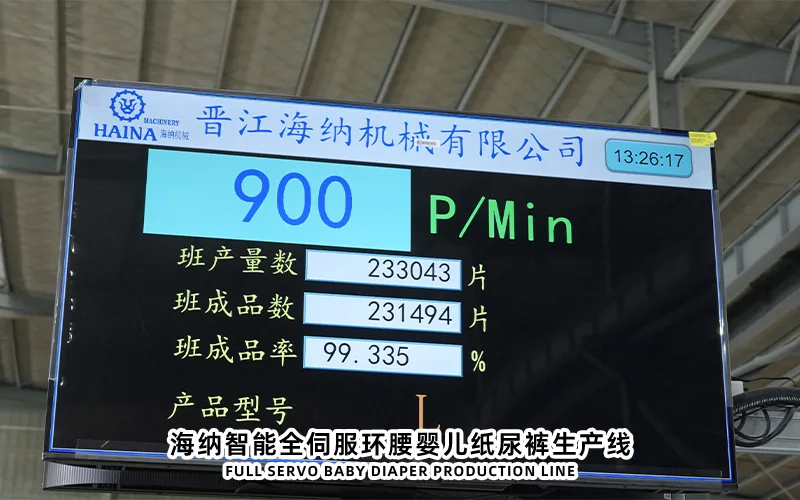
Output classifications must retain their conditions. Design speed is not the same as stable working speed. The operating speed selected by a production team may be lower to protect product quality or process stability, and the contractual acceptance value is whatever the buyer and supplier agree to test. Request these values separately, along with the product format, materials, sampling method, accepted product definition, and run conditions.
Review bottlenecks across unwind, forming, joining, cutting, folding, counting, and packaging interfaces. Automatic roll changes or accumulation may affect continuity, while frequent material replenishment or downstream stops may restrict practical output. A fast central process paired with a constrained manual endpoint is still a constrained system.
Factory capacity planning must add scheduled time, product mix, changeovers, cleaning, maintenance, quality holds, material handling, and expected stoppage categories based on local evidence. Suppliers can provide demonstrated equipment data; the project sponsor owns the business assumptions. Avoid converting a short trial into an annual production guarantee.
Useful output is governed by the complete line rather than one high-speed station.
Changeover and Product Range
Product flexibility can come from recipes, mechanical adjustment, exchanged change parts, or major module modification. Separate these categories. A recipe change may update positions and timing, but it cannot alter every physical tool or material path. The proposal should list which sizes use common parts, what needs replacement, how parts are identified and stored, and what verification follows each change.
Witness a representative changeover if product mix matters. Measure the full sequence from the last accepted product of one format to the first accepted product of the next, while separately recording preparation that can occur offline. Observe access, lifting, fastener control, setting confirmation, web threading, trial waste, inspection adjustment, and quality release. The result is evidence for planning, not a universal promise for every team and format.
Also review future capability honestly. Reserved space, control capacity, and mechanical interfaces may reduce future work, but new products still require engineering and validation. Document what is physically prepared, what is only conceptually possible, and which changes are outside the offered scope.
Factory Fit and Downstream Integration
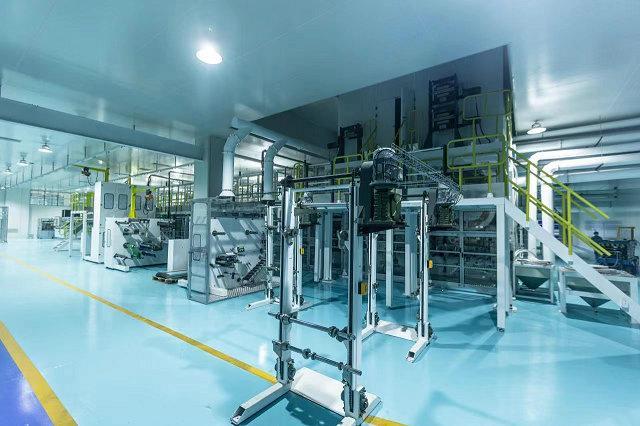
Machine type must suit the site. Compare layouts with material flow, roll staging, waste collection, operator positions, maintenance withdrawal zones, cabinets, utilities, emergency access, lifting, and packaging. Confirm utility quality and connection boundaries using project-specific supplier data. Equipment that fits as a rectangle may fail as an operable production system when aisles and service space are added.
Downstream integration needs mechanical, control, and information definitions. State product orientation, pitch or batch arrangement, transfer height, permitted accumulation, speed signals, stop logic, fault ownership, reject handling, and data exchange. Test the complete supplied interface during FAT or a planned site acceptance step.
HAINA can review product definitions and line-boundary requirements for a proposed diaper project. The sponsor should use that review to confirm the exact product family, process endpoint, automation functions, factory responsibilities, and acceptance evidence before commercial comparison.
Machine Type Decision Tree
First: Select the finished-product family and freeze representative product constructions and materials.
Second: Draw the required process from incoming rolls to the agreed finished-product or package handoff.
Third: Mark every automatic function, manual intervention, inspection point, and external interface.
Fourth: Compare stable tested output, changeover evidence, site fit, documentation, and support on the same scope.
Decision gate: Do not approve a machine-type label until a configuration schedule and FAT method make the label testable.
The selected type should be documented as a specific testable configuration.
Frequently Asked Questions
Is one machine able to make baby and adult diapers?
Do not assume so. Product scale, materials, tooling, handling, and downstream requirements differ. Require a supplier configuration matrix and representative trials for every claimed family.
Does fully automatic include packaging?
Only if the stated battery limit includes packaging and its interfaces. Many line descriptions end at counting, stacking, or transfer, so the endpoint must be written into the offer.
Is a pull-on machine just an open diaper line with new tooling?
Not generally. Waist formation, side joining, cutting, web paths, inspection, and handling can require a different architecture. Compare modules rather than relying on shared upstream functions.
How should buyers verify machine flexibility?
Review the product envelope, parts and settings matrix, changeover sequence, physical limits, and trial evidence. Separate current validated capability from future engineering potential.
Conclusion
A diaper machine type is a combination of finished-product architecture, supplied process scope, automation boundary, verified output conditions, changeover method, and factory interface. Project sponsors should not shortlist equipment from labels such as automatic, flexible, or high speed. The next practical action is to draw one page showing the launch product, each required processing station, manual tasks, packaging handoff, and site boundary. Send that same page to every supplier, require a marked configuration and evidence response, and select the machine category only after the differences can be witnessed in a material trial or FAT.